Drew Fulk (WZRD BLD): producer bridging modern metal and pop production
Drew Fulk produces Motionless In White, Ice Nine Kills, Bad Omens, and earlier Lil Peep. Editorial gauge analysis for the rhythm-guitar lane his productions sit in.
Reviewed by the Change Your Strings editorial team ·
Drew Fulk, credited as WZRDBLVD, produces the modern-metal-meets-pop-production lane: Motionless In White, Ice Nine Kills, Bad Omens, and earlier Lil Peep. His records layer heavy rhythm guitar against polished pop arrangements, so gauges typically run .010–.052 or .011–.054 in Drop C or Drop C# to hold rhythms tight against dense mixes. Brand preference is not publicly documented; the gauge math does the work.
Drew Fulk's specific recommendations
Documented gauge + set calls, tied to genre + tuning. Each card links every facet to the relevant matrix cell.
Ernie Ball Beefy Slinky (11–54)
“Drop C and Drop C# default for Motionless In White / Ice Nine Kills-style rhythm. The low 54 holds attack definition against sub-bass and programmed-drum layers. Editorial gauge call for the production lane, not a Drew Fulk endorsement.”
Who Drew Fulk is
Drew Fulk, sometimes credited as WZRDBLVD, is an American producer, songwriter, and mixer who works across the modern-metal and pop-adjacent production lanes. His production credits include Motionless In White's Disguise (2019) and Scoring the End of the World (2022), Ice Nine Kills' Welcome to Horrorwood (2021), Bad Omens' The Death of Peace of Mind (2022) material, Disturbed, Marilyn Manson's We Are Chaos, Pop Evil, Dance Gavin Dance, and, notably, Lil Peep's crossover-era material.
That last credit matters. Fulk is one of the few producers whose client list spans from theatrical metalcore to pop-trap crossover, which is relevant context for the sound of his heavier records. The production polish and arrangement density that define pop production carries into his metal work, which constrains the guitar tracking: the guitars have to hold tightness and pick-attack definition in denser mixes than a pure metal producer would build.
Fulk has not published extensive public gear content about his own string preferences, and his productions feature the band's own players tracking rather than Fulk himself. The recommendations below are editorial analysis of the strings that fit his production lane, not endorsement claims.
Production signatures
Three recurring signatures across Fulk's modern-metal catalog:
- Polished low-end glue. His mixes have a more pop-shaped low-end than a pure metal producer would build, sub-bass layers under the guitar track, sidechain-compressed under the kick. Guitar strings in this context need to be tight (no flap) without dominating the low-end frequencies, because there's a bass-synth layer competing for that space.
- Layered rhythm-guitar architecture. Lead-rhythm pairs, octave-doubled riffs, pitch-shifted accent tracks. More layers than a classical-metal production. String freshness matters here because four or five guitar tracks stacking tends to expose any inconsistency in attack.
- Drop C# as the signature tuning. Across Motionless In White, Bad Omens, and the heavier Ice Nine Kills material, Drop C# is the default. Gauge math: .011–.048 or .011–.054 on a 25.5" guitar holds that tuning cleanly.
Gauges that fit the Fulk lane
Drop C# / Drop C (6-string rhythm)
.011–.054 nickel-plated steel is the default gauge for this tuning range on a 25.5" scale electric. Brand is player preference, not producer preference; Fulk has not publicly named a specific string brand for his own use, so the recommendation is gauge-math, not endorsement.
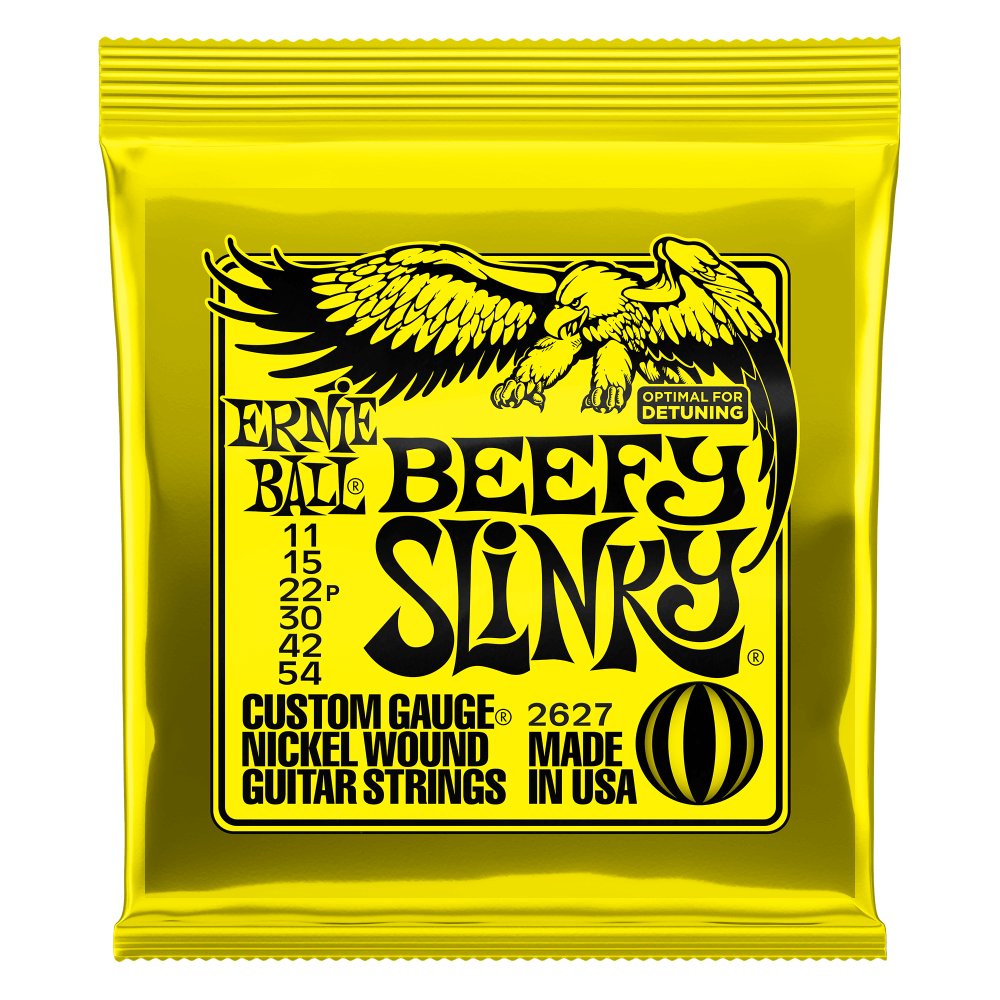
Beefy Slinky (.011–.054)
Why this one: Editorial pick for Drop C and Drop C# rhythm guitar. Low string tight enough to hold rhythm definition against a dense modern-metalcore mix. Gauge-fit, not a Drew Fulk endorsement.
Drop D (6-string rhythm)
.010–.046 works for Drop D. .011–.048 buys extra security if the record dips to Drop C# without re-tuning mid-session. For Ice Nine Kills-style Drop D material:

Regular Slinky (.010–.046)
Why this one: Editorial pick for Drop D and E standard rhythm, the lighter end of the production lane Fulk works in. Gauge-fit, not a Drew Fulk endorsement.
E / Eb standard (pop-adjacent crossover)
The Lil Peep / Marilyn Manson / Pop Evil material sits in E or Eb standard more often. .010–.046 is the default gauge. No changes from a standard modern-rock lane.
Why gauge choice is about the mix, not the player
A useful frame for anyone trying to produce in Fulk's lane: the guitar is one voice in a dense arrangement. You are not aiming for the fattest, most present guitar tone imaginable. You are aiming for a guitar tone that holds its rhythm against synth layers, multi-tracked vocals, programmed drums, and production effects.
That frame changes the gauge calculation. You want tight, not fat. Articulate, not overwhelming. Picking attack that cuts through rather than low-end that dominates. Gauge math: heavy enough to hold pitch at the tuning, not so heavy that the string loses attack definition.
Next steps
- Genre pages relevant to Fulk productions: metalcore in Drop C#, metalcore in Drop D, hard rock in Eb standard.
- Related producer pages: Joey Sturgis (earlier-era metalcore lane), Andy Sneap (heavier metal lane), Adam "Nolly" Getgood (prog-djent lane).