Cliff Burton's bass strings: the Metallica 1982-1986 rig, sourced
Documented bass-string gauges, brands, and tunings Cliff Burton used with Metallica from 1982 until his September 1986 death. Rotosound Swing Bass 66 documented use, Rickenbacker 4001 + Aria SB-1000 + Alembic basses, Morley wah pedal effects. Historical, with citations.
Metallica (1982-1986) · reviewed by the Change Your Strings editorial team ·
Clifford Lee Burton (February 10, 1962 – September 27, 1986) was Metallica's bassist from December 1982 until his death in a tour-bus accident in Sweden during the Damage, Inc. tour. Documented Rotosound Swing Bass 66 user across the canonical three Metallica records (Kill 'Em All, 1983; Ride the Lightning, 1984; Master of Puppets, 1986). Played Rickenbacker 4001 + Aria SB-1000 + Alembic Spoiler. Defined what metal bass could be: lead-instrument vocabulary, classical harmonic awareness, distortion-and-wah signal chain that no metal bassist had previously deployed at scale. Posthumous Rock and Roll Hall of Fame with Metallica (2009).
Strings Cliff Burton played
Historical use · documented by the Change Your Strings editorial team · Affiliate links
Affiliate links: we earn commission on qualifying Amazon purchases. See our full disclosure.
At a glance
Active
Affiliations
- Metallica (bassist, December 1982 – September 27, 1986)
- Trauma (briefly, late 1981 – December 1982)
- EZ-Street (high-school band)
- Rotosound Swing Bass 66 (documented use; pre-signature era)
- Aria SB-1000 (documented bass)
- Rickenbacker 4001 (documented bass)
- Alembic Spoiler (documented later-era bass)
- Morley Power Wah / Volume (signature lead-bass effect)
- Mesa Boogie / Sunn amplification (documented touring rig)
Notable credits
- Metallica, Kill 'Em All (1983)
- Metallica, Ride the Lightning (1984)
- Metallica, Master of Puppets (1986)
- Metallica, '(Anesthesia) – Pulling Teeth' bass solo on Kill 'Em All
- Metallica, 'Orion' instrumental on Master of Puppets (bass-led arrangement)
Who Cliff Burton was
Clifford Lee Burton, born February 10, 1962, in Castro Valley, California, was Metallica's bassist from December 1982 until his death on September 27, 1986, in a tour-bus accident in Sweden during the Damage, Inc. tour for Master of Puppets. He was 24 years old.
Burton recorded three studio records with Metallica: Kill 'Em All (1983), Ride the Lightning (1984), and Master of Puppets (1986). The catalog defined what heavy-metal bass could be. Burton's classical-harmonic vocabulary, his Rickenbacker 4001 + Aria SB-1000 + Alembic Spoiler instruments, and his distortion-and-wah signal chain were all unprecedented in thrash-metal contexts at the time.
Posthumous Rock and Roll Hall of Fame with Metallica (2009). His successor Jason Newsted joined Metallica in October 1986; Robert Trujillo has been the band's bassist since 2003.
Style signatures
Three things across Burton's three Metallica records you can identify as his:
-
Lead-bass vocabulary inside metal arrangements. '(Anesthesia) – Pulling Teeth' (Kill 'Em All, 1983) is the canonical bass-solo example; 'Orion' (Master of Puppets, 1986) embeds lead-bass passages inside a long-form instrumental. No metal bassist before Burton had deployed this vocabulary at scale.
-
Classical-harmonic awareness. Burton's pre-Metallica classical + jazz-harmony study shows in the chord-tone-aware bass lines + the modulations that the 'Master of Puppets' / 'Call of Ktulu' / 'The Thing That Should Not Be' arrangements navigate.
-
Distortion-and-wah signal chain. Morley Power Wah + bass distortion gave Burton the lead-instrument voice that defined his solos. The signal chain was uncommon in metal bass at the time + has been imitated by many subsequent metal bassists.
Related
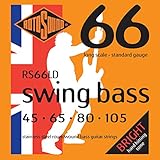
Documented strings. Rotosound Swing Bass 66 (.045-.105) as the documented production set across the Metallica catalog.
Successors at Metallica. Jason Newsted (October 1986 - January 2001), Robert Trujillo (February 2003 - present).
Bassist hub. Bassists index. Metal-bass canon parallel: Steve Harris (Iron Maiden, contemporary). historical canon: Burton's contemporaries shaped early thrash + heavy-metal bass; his death cut short what most metal-press considers the most influential metal-bass career of the 1980s.